7P Framework
← Stories
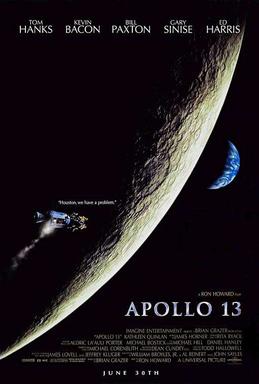
Poster for Apollo 13 (1995)

People · also: Product

Apollo 13

Directed by Ron Howard

Film · 1995 · 2h 20m

Starring Tom Hanks, Kevin Bacon, Bill Paxton, Ed Harris, Gary Sinise.

Find streaming options ↗

Let's work the problem, people. Let's not make things worse by guessing.
Gene Krantz (Ed Harris), Apollo 13 (1995)

Pairing

Why this story, in this stage

Apollo 13 is paired with the People stage — who builds it with you determines whether it gets built at all. A model. It also speaks to Product.

The argument

Central thesis

Apollo 13 is the only film on the shelf that shows a team improvising under existential pressure where the answer must be found, the timeline cannot extend, and the failure mode is death by asphyxiation in space. Gene Krantz — Mission Control flight director — assembles a team to solve a problem nobody planned for: how to fit a square CO2 scrubber into a round receptacle using only what's on the spacecraft.

The build it with what's on the spacecraft scene is the founder lesson at its concrete crunch. A table is laid out with every object the astronauts have access to — duct tape, plastic bags, hose, a flight manual cover. The engineers are told to make the device work or three men die. They make the device work. The film holds the camera on hands building, not on speeches.

For founders, the film captures both crisis-team coordination AND the constraint discipline: when you cannot add resources, the answer must come from re-arrangement of what exists. This is the founder's daily condition, rendered honestly for once.

The hook

The founder lesson

Most founder problems are solved with what's already on the spacecraft. The work is rearrangement, not addition.

Three founder lessons.

First, Krantz's discipline. "Let's work the problem, people. Let's not make things worse by guessing." When founders are hit with a major problem (lost a key customer, runway shortening, key hire leaves), the instinct is to act. Krantz's first move is always get the data. Status. Power. CO2. Trajectory. Then, and only then, decisions. Founders who reach for action before data make the situation worse twice — once by acting on incomplete information, and again by depleting the team's capacity to think.

Second, the constraint discipline. The CO2 problem can't be solved by going to Home Depot. It must be solved with what's on the spacecraft. When founders hit a crunch, the instinct is to widen the resource pool — hire someone, raise more, add a tool. The film says: look at the table again. Most answers are there. The work is rearrangement, not addition. Founders who skip the spacecraft inventory and reach for additions burn cash and time on additions that wouldn't have been needed.

Third, the team isn't the astronauts. The film's structural reveal is that the heroes aren't the three men in space — they're Krantz's team in Mission Control, Mattingly running the simulator, the engineers building the scrubber, the controllers monitoring power. The founder's heroism is rarely visible from outside. Founders who stay on the spacecraft — visible, charismatic, on stage — instead of running Mission Control miss the work that actually saves the company.

5 takeaways

What to remember

  • "Let's work the problem" — data before opinion

    Krantz's first move under crisis is always to get the readings, not the suggestions. Founder analog: when the crisis lands, your first hour is data — what's the actual loss, the actual runway, the actual customer impact — not your team's first reactions. Action without data amplifies the loss.

  • Re-arrangement, not addition

    The CO2 scrubber is built from duct tape, plastic bags, and a manual cover. Founder analog: before reaching for a hire, a tool, a raise, list every resource you already have — and ask what the answer can be using only that. Most answers are on the table; the additions are reflex, not strategy.

  • Power-down — cut before you have to

    Krantz orders the spacecraft powered down to 12 amps before they know if they need to. *Founder analog: in a crunch, cut to survival levels before you're forced to.* Optional cuts at 80% runway are easier than mandatory cuts at 20%. The discipline is preemptive austerity.

  • "Failure is not an option"

    Krantz's line frames the room; it doesn't argue. Founder analog: belief is scaffolding for technique, not a substitute for it. The slogan only works because the engineers underneath it are doing the actual work. Founders who say "failure is not an option" without the engineering room behind them are reciting, not leading.

  • Re-entry — the long hold

    The final ten minutes are radio silence as the capsule reenters the atmosphere — the team can do nothing but wait. Founder analog: at the end of a crisis there's always a phase where you've done the work and now you're just waiting to see if it landed. That phase is part of the work; don't fill it with second-guessing.

Practice CardOne-screen exercise

Lay out the spacecraft.

Pick the most pressing crisis your company faces this week. Before reaching for additions — a hire, a tool, a raise, a partnership — list every resource you already have. People on payroll. Money in the bank. Distribution channels. Customer relationships. IP. Time.

Be specific. Don't write 'team of 8.' Write 'Maria can write copy at production speed; Faruk has the ops experience to run hiring; Layla still has 30% of her time uncommitted.'

Now ask: given only this table, what can the answer be?

Most founders skip this step and reach for additions because additions feel like motion. Apollo 13's lesson is that motion is the wrong outcome; the right outcome is the answer, found from what's already in front of you.

Run this exercise at every crisis. The discipline isn't to never hire or raise; it's to exhaust the spacecraft first.

Share with a founder who's deciding whether to keep going.