7P Framework
← Stories
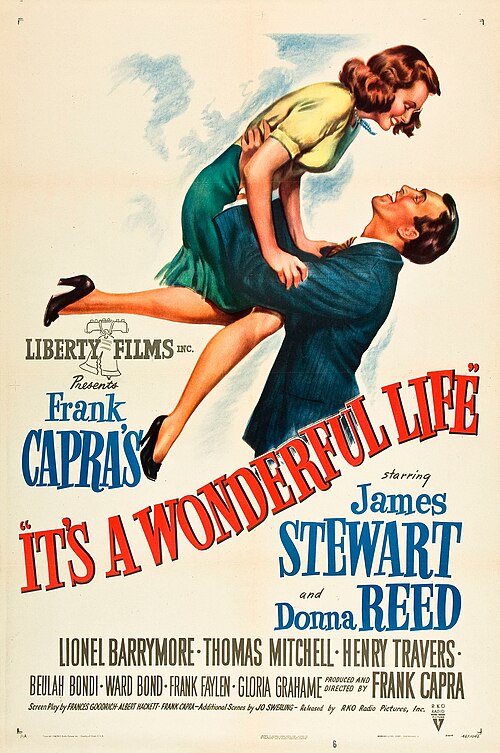
Poster for It's a Wonderful Life (1946)

Purpose

It's a Wonderful Life

Directed by Frank Capra

Film · 1946 · 2h 10m

Starring James Stewart, Donna Reed, Lionel Barrymore.

Find streaming options ↗

Strange, isn't it? Each man's life touches so many other lives. When he isn't around he leaves an awful hole, doesn't he?
Clarence, It's a Wonderful Life (1946)

Pairing

Why this story, in this stage

It's a Wonderful Life is paired with the Purpose stage — the reason you start, and the reason you survive. A model.

The argument

Central thesis

Capra's film is structured as a counter-factual. George Bailey, on the verge of suicide on Christmas Eve, is shown a Bedford Falls in which he was never born. His brother Harry died in childhood — because George wasn't there to save him. Mr. Gower, the pharmacist distraught with grief over his son's death, accidentally poisoned a child — because young George wasn't there to catch the mistake. The town itself became Pottersville, a degraded place named for the villain, because nobody had stood between Mr. Potter and his ambitions for thirty years.

George sees the negative space of his own life and learns that the smallness he despised was actually a kind of largeness. He never left Bedford Falls. He never built the bridges and skyscrapers he dreamed of as a boy. He ran a Building & Loan that helped working people own homes — small work, repeated daily, for thirty years. That's the work that prevented Pottersville.

The film's premise IS the Purpose Compass prompt: what would be lost if your work didn't exist? Rendered as ninety minutes of cinema.

The hook

The founder lesson

If your company never existed, who specifically would be worse off — and how, exactly?

Three founder lessons.

First, the prompt itself. Most companies could disappear and the world would be fine — someone else would build it; the customers would find an alternative; the founder's identity would survive. That's not a reason to quit; it's a reason to find the version of your work that can't be substituted. George Bailey's bank prevented Pottersville. What Pottersville is your company preventing? If the answer is nothing, that's data — not despair. Re-shape the work until the counter-factual actually changes.

Second, the dailiness of purpose. George's purpose isn't grand. It's a long sequence of small refusals to become Potter: lending money to a Black family the bank wouldn't serve, walking the rounds of his neighborhood, choosing the small loan over the big sale every time. Founders looking for a single dramatic why often miss that purpose lives in daily refusals. The Pottersville counter-factual isn't prevented by one heroic act; it's prevented by ten thousand mundane ones.

Third, the bridge. When Clarence shows George the world without him, the film ends with George running back to the bridge from which he was about to jump — and asking to live again. That's a founder lesson too. The view from outside your own life is the move that lets you see what you've been building. Most founders never get the Clarence visit. The exercise is to give it to yourself.

5 takeaways

What to remember

  • Pottersville is the diagnostic

    What the world becomes if you don't show up. Founder analog: the negative space of your work — the version of your customers' lives without it — tells you whether the work is structural or substitutable. If Pottersville never forms, your work isn't load-bearing yet.

  • The Building & Loan — small, unglamorous, structural

    George never builds the bridges he dreamed of. He runs a credit union that helps working people own homes. Founder analog: the work that compounds is rarely the work that looks impressive in a pitch. Choose structural over photogenic.

  • "No man is a failure who has friends"

    The film's closing line, inscribed on a book. Founder analog: community is the metric, not the consolation prize when the metrics fail. Mentors. Peer founders. The team that stays. If you have them, the verdict isn't yet decided.

  • Clarence's wings

    Clarence earns his angel wings only when the work is done. Founder analog: the recognition arrives long after the work — usually from people who weren't watching when the work was happening. Don't chase the wings. Do the work.

  • The bridge

    George chooses to live the life he was already living, after seeing it from outside. *Founder analog: most founder despair is solved by the view from outside, not by a different life.* The Practice Card below is one way to get there without an angel.

Practice CardOne-screen exercise

Run the counter-factual.

Take twenty minutes and write the world without your company.

Be specific. Don't write 'no one would have my product.' Write the actual people: name the customers who'd be using a worse alternative; the team members who'd be at jobs that paid them less or used them up faster; the lessons that wouldn't propagate; the conversations that wouldn't happen.

If the world without you is identical to the world with you, that's the data. Either re-shape the work until the counter-factual actually changes, or find the version of your work that only you are positioned to do.

Re-run this exercise yearly. The first time it's hard. The fifth time, the answer is clearer than you'd expect.

This is the same prompt the Purpose Compass asks. Whichever path you take — the worksheet or the watch — both arrive at the same question.

Share with a founder who's deciding whether to keep going.