7P Framework
← Stories
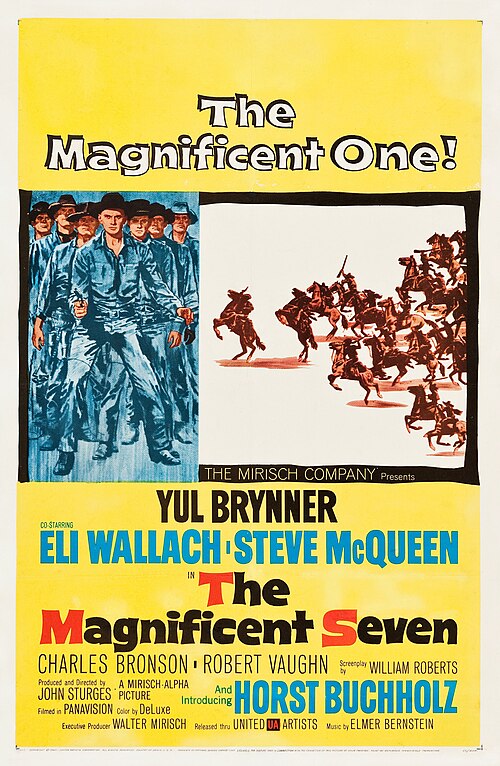
Poster for The Magnificent Seven (1960)

People · also: Purpose

The Magnificent Seven

Directed by John Sturges

Film · 1960 · 2h 8m

Starring Yul Brynner, Steve McQueen, Charles Bronson, James Coburn.

Find streaming options ↗

We deal in lead, friend.
Vin (Steve McQueen), The Magnificent Seven (1960)

Pairing

Why this story, in this stage

The Magnificent Seven is paired with the People stage — who builds it with you determines whether it gets built at all. A model. It also speaks to Purpose.

The argument

Central thesis

The Magnificent Seven's structure is the recruitment montage that everything else hangs from. Chris (Yul Brynner) tells each candidate the same thing: bad pay, no glory, you'll probably die. Each one joins anyway. Vin (McQueen) joins because the mortuary just made him feel old. O'Reilly (Bronson) joins because he's broken and tired and wants to be useful one more time. Lee (Vaughn) joins because he's running from himself. Britt (Coburn) joins because he doesn't have anything else. Chico (Buchholz) joins because he's young and wants to prove he's a man, not because he understands the cost.

The film never lies about the cost. Three of the seven die. The survivors leave the village they saved — their work isn't to live there; it's to do the work and move on. When Chris and Vin ride out at the end, the old farmer says the only words that matter: "Only the farmers won. We always lose."

For founders, the structure of the film is the recruitment lesson nobody else captures: people don't join your company for the comp package; they join because of what they're running from, what they're chasing, or what they can't say no to. If you don't know which one applies to each person you've recruited, you don't really have a team — you have a payroll.

The hook

The founder lesson

People don't join your company for the offer letter. They join because of what they're running from, what they're chasing, or what they can't say no to.

Three specific founder lessons.

First, honest recruitment. Chris's offer is the model. Twenty dollars. No glory. You might die. The candidates are not under-informed; they sign with full knowledge. Founders who oversell the role at recruitment time spend the rest of the relationship managing disappointment. Founders who undersell — here's exactly what's hard, here's what we don't have, here's what could fail — get the people who would have joined anyway, which is the only kind worth having.

Second, each person's reason matters. Chris doesn't homogenize the seven into guns for hire. He learns each man's reason. Vin's tired of mortuaries. O'Reilly is broken. Lee is running. Britt has nothing else. Chico wants to prove. That information is leadership data. When Chris later has to keep them together through the hard middle of the job, knowing each man's reason is the only way to know how to talk to him on the worst day. Founders who don't do this work eventually have a team they can't reach.

Third, the team becomes a team through shared difficulty, not engineered chemistry. The Seven aren't friends. They have different styles, different ages, different backstories. They become a team when they survive the first attack on the village together. Founders who try to engineer team chemistry — offsites, retreats, personality assessments — without first putting the team through real difficulty are skipping the only step that creates the bond that lasts.

5 takeaways

What to remember

  • "Twenty dollars" — the honest offer

    Chris's recruitment line: bad pay, no glory, probably die. Founder analog: undersell at recruitment time. Tell candidates exactly what's hard, what you don't have, what could fail. The people who join anyway are the only ones worth having; the rest you'd lose later when reality arrives.

  • Each person's reason matters — and is different

    Vin's tired of mortuaries. O'Reilly is broken. Lee is running. Founder analog: learn each person's reason for joining; that's the leadership data you need on the worst day. They were tired of corporate. They wanted to work with you. They couldn't say no to the problem. Real reasons, not LinkedIn-friendly ones.

  • The mismatch is the team

    Specialists don't share style. Founder analog: stop trying to hire "culture fit" if culture fit means "like us." Hire people whose styles complete each other and whose consequences are shared. The team forms in difficulty, not in onboarding week.

  • The cost is real

    Three of the seven die. Volunteering for purpose includes the cost. Founder analog: when recruiting, name the cost honestly — 60-hour weeks for a year, equity that may be worth nothing, decisions that will be wrong. Pretending otherwise is dishonest recruiting; the cost gets paid anyway.

  • The departure

    The survivors leave the village they saved. Founder analog: the work isn't the home; it's the pitch you took. When the work is done, the team disperses, and that's not failure. The relationships that survive the departure are the real ones; the rest were always conditional.

Practice CardOne-screen exercise

Why is each person on your team here?

List every person on your team. Next to each name, write the actual reason they joined — not the LinkedIn-friendly version.

They were tired of corporate. They wanted to work with you. They needed the income. They couldn't say no to the problem. They wanted to prove something to themselves.

If you can't fill in a real answer for someone, you don't know them well enough yet — and you won't know what makes them stay. Have the conversation that fills the blank. Most founders skip this conversation because it feels intrusive. The intrusion is recruiting honestly.

Re-do this list every six months. Reasons change. Vin came in tired of mortuaries; midway through the job he's there because he won't leave Chris. The reasons that change tell you who's growing. The reasons that don't change tell you who's leaving.

Share with a founder who's deciding whether to keep going.